Mitochondria: The Powerhouses of Consciousness
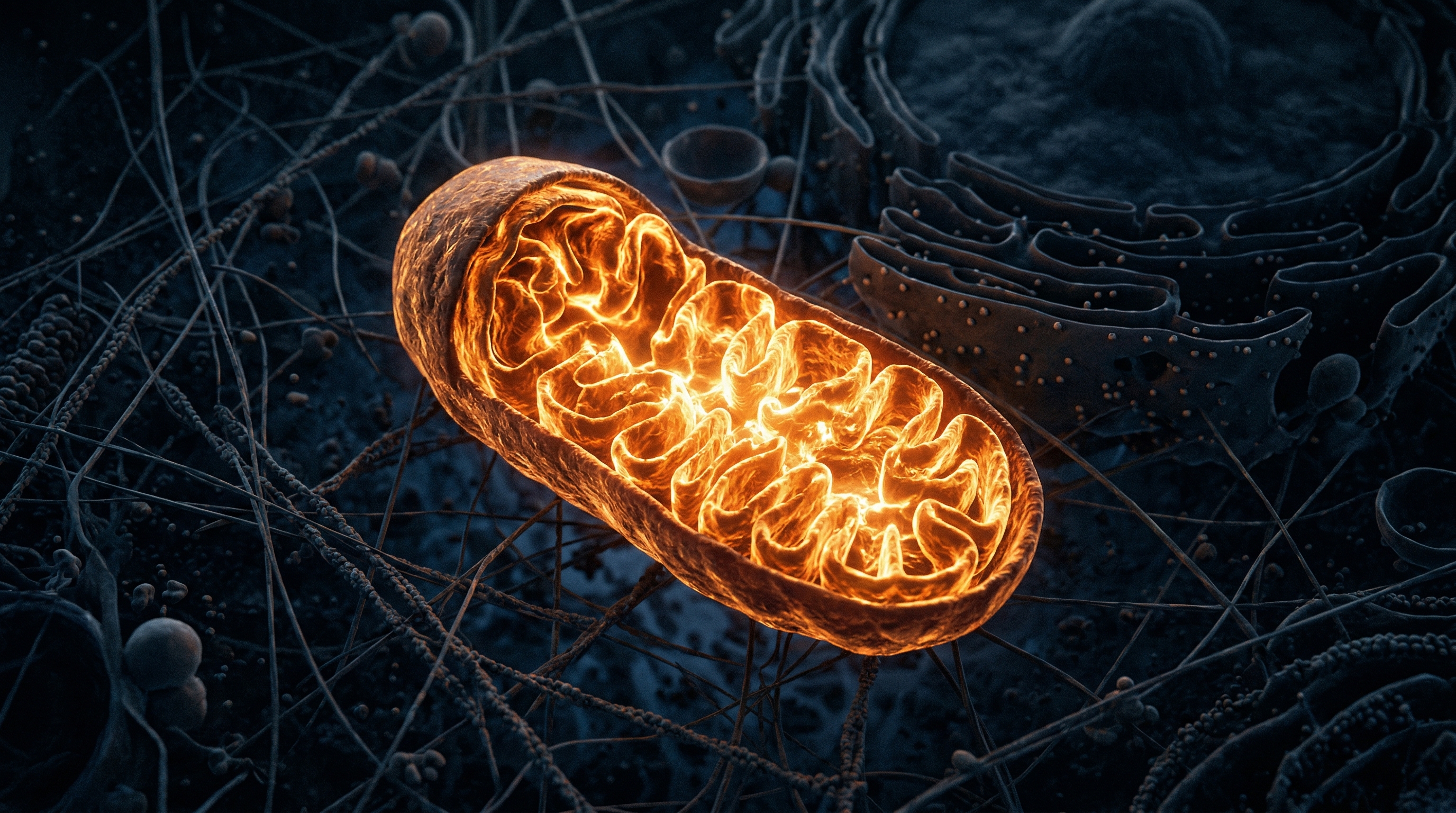
Mitochondria: The Powerhouses of Consciousness
In 1898, Richard Altmann discovered a mysterious organelle—"mitochondria," from the Greek for "thread-like granule." For over a century, we understood them simply as the cell's power plants, churn out ATP through oxidative phosphorylation. But what if they're far more? What if mitochondria are not just energy generators, but quantum signaling centers that bridge biology and consciousness?
The science is clear: mitochondria are ancient bacteria that entered eukaryotic cells over 1.5 billion years ago, establishing an endosymbiotic relationship that enabled complex life. They have their own DNA (mtDNA), replicate independently, and operate with sophisticated energy-conversion machinery. But modern quantum biology suggests their role extends far beyond metabolism—into the very nature of awareness itself.
The Quantum Mitochondrion
At the heart of mitochondria lies the electron transport chain (ETC)—a series of protein complexes embedded in the inner mitochondrial membrane that shuttle electrons to create a proton gradient, driving ATP synthesis. But this process involves quantum phenomena:
Quantum tunneling: Electrons and protons move through the ETC not just by classical hopping, but via quantum tunneling—penetrating energy barriers they shouldn't physically cross. This enables the remarkable efficiency of mitochondrial respiration.
Recent research suggests mitochondria maintain quantum coherence during electron transport. A 2014 review in Biochemical Society Transactions discussed the "quantum mitochondrion" concept, noting that coherent electron transport, proton tunneling, and ultraweak photon emissions suggest mitochondria harness quantum effects for optimal function.
Here's where it gets fascinating: mitochondria emit ultraweak biophotons—single photons in the visible and near-UV range, produced during reactive oxygen species (ROS) reactions. These aren't random emissions; they show coherence patterns that may carry information across cells and possibly brain regions.
Mitochondria Meet Microtubules
Enter Roger Penrose and Stuart Hameroff's Orchestrated Objective Reduction (Orch-OR) theory—the most controversial yet empirically supported theory of consciousness. They propose that consciousness arises from quantum computations in microtubules, the protein scaffolding inside neurons. But mitochondria aren't bystanders in this drama.
In neurons, mitochondria dynamically associate with microtubules, supplying energy and regulating calcium flux necessary for quantum coherence in tubulin proteins. Recent studies confirm that microtubule-stabilizing drugs like epothilone B delay unconsciousness during anesthesia, suggesting microtubule quantum states are essential for awareness.
Some theorists have taken this further: if microtubules generate quantum-consciousness states that emit biophotons (linked to mitochondrial redox), then mitochondria may serve as the energetic interface between quantum biology and neuronal processing—"bridging the spark of ATP to the spiral of consciousness."
Mitochondrial Signals Beyond Energy
Mitochondria are also signaling organelles that regulate:
- Cell death (apoptosis): Release of cytochrome c triggers programmed cell death, a decision-making process sensitive to cellular energy states.
- Calcium buffering: Mitochondria absorb and release calcium, signaling ions that influence neurotransmitter release and potentially quantum state collapse.
- ROS signaling: Low levels of reactive oxygen species act as second messengers, modulating gene expression and cellular responses.
- Mitokines: Mitochondria secrete signaling proteins that affect distant tissues, creating systemic physiological coherence.
The Consciousness Connection
How might any of this connect to consciousness? A speculative but experimentally testable hypothesis emerges:
Coherence field theory: Mitochondrial biophotons and microtubule quantum states form an integrated coherence field, where quantum information is processed, collapsed via objective reduction (gravity-induced wavefunction collapse per Penrose), and emitted as biophotonic signatures—potentially measurable as near-death gamma bursts or altered states of awareness.
Near-death experiences often report vivid awareness during clinical cardiac arrest—a time when cerebral blood flow drops dramatically, yet gamma-band EEG coherence (40 Hz) remains elevated. Could mitochondrial biophotons sustain localized quantum coherence even as consciousness seemingly "detaches" from neural processing?
Another angle: brain disorders show mitochondrial dysfunction. Alzheimer's, Parkinson's, and autism all display altered mitochondrial dynamics, reduced bioenergetic efficiency, and increased oxidative stress. What if these aren't just degenerative changes, but losses of quantum coherence that degrade consciousness?
Optimizing Mitochondrial Function for Consciousness
Practical applications emerge from this science:
Exercise Protocol
High-intensity interval training (HIIT) triggers mitochondrial biogenesis via PGC-1α, increasing the number and efficiency of mitochondria. Regular exercise not only boosts energy but may enhance quantum coherence capacity.
Nutritional Support
Key mitochondrial nutrients include CoQ10 (ubiquinone), alpha-lipoic acid, acetyl-L-carnitine, and B vitamins. Polyphenols like resveratrol and curcumin activate mitokine signaling.
Breathing Practices
Nasal breathing produces nitric oxide that enhances mitochondrial respiration by modulating cytochrome c oxidase. Slow, controlled breathing practices (pranayama, box breathing) may optimize quantum energy flow.
Cold Exposure
Cold thermogenesis activates brown adipose tissue mitochondria, increasing sympathetic tone and potentially enhancing cellular quantum coherence through controlled oxidative stress.
The Frontier
Mitochondria research is exploding. Scientists are discovering their role in immunity, aging, intercellular communication, and possibly consciousness. While mainstream neuroscience still views consciousness as emergent from neural firing patterns, the quantum-mitochondrial perspective offers a testable alternative: awareness as a fundamental quantum-biological phenomenon, orchestrated by the very organelles that power us.
As Stuart Hameroff notes: "Mitochondria aren't just batteries—they're ancient, quantum-capable organisms that may bridge consciousness and biology in unexpected ways."
The powerhouses of consciousness may be far more than powerhouses at all.