Photobiomodulation: Light as Medicine
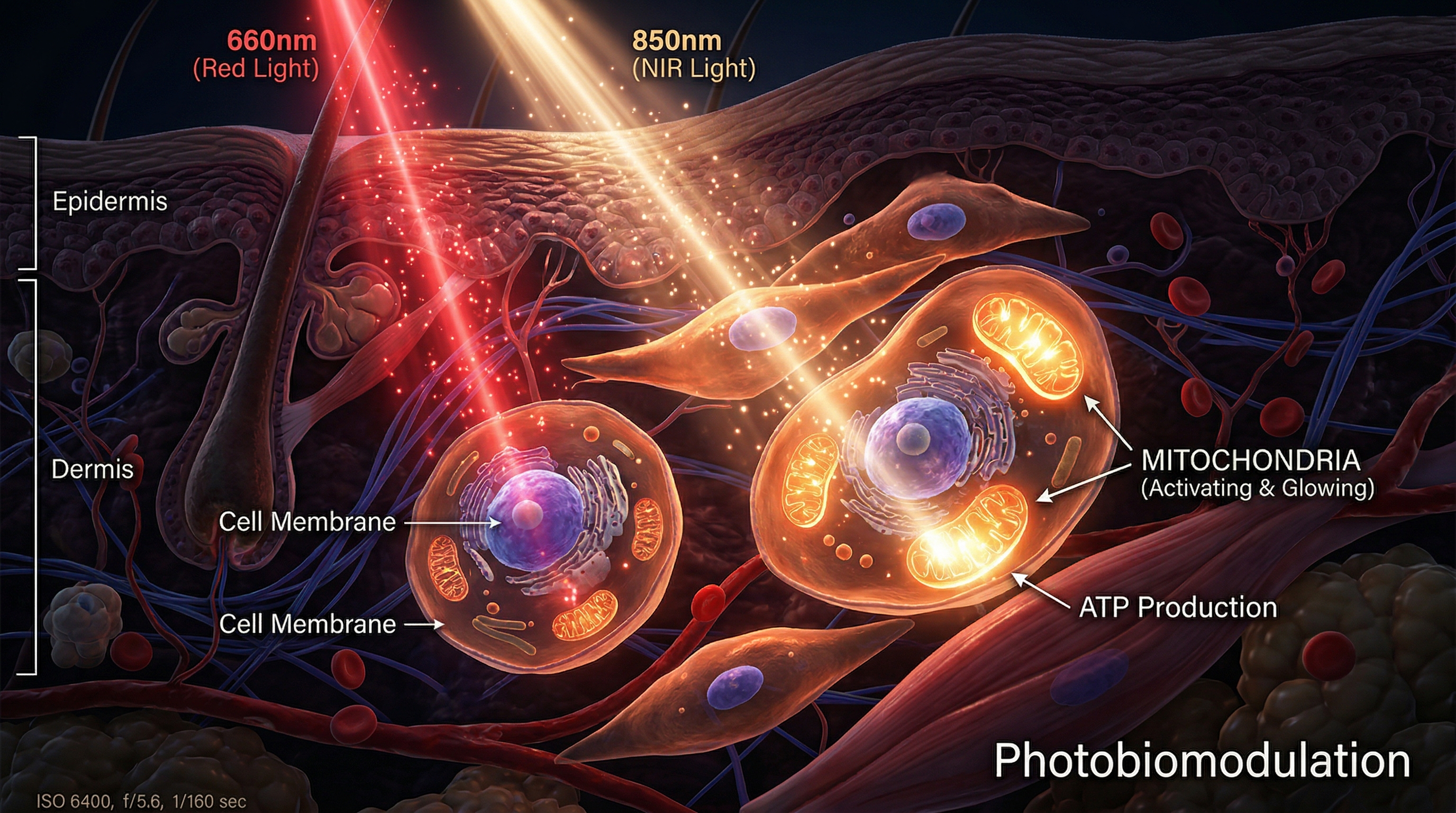
The Photon's Promise
What if I told you that one of the most powerful medical therapies available to you doesn't require pills, needles, or surgery? It only requires light—a simple, non-invasive modality that has been used for centuries in folk medicine but is only now revealing its full potential through modern science.
Photobiomodulation (PBM), also known as low-level light therapy (LLLT) or red light therapy, uses specific wavelengths of red (600-700 nm) and near-infrared (NIR, 700-1100 nm) light to stimulate cellular function, reduce inflammation, accelerate healing, and enhance cognitive performance.
But here's the crucial distinction: PBM doesn't heat tissues like infrared saunas or laser surgery. It delivers a signal—a bioenergetic command to cells to upregulate their function. It's like pressing the "boost" button on your metabolism, one photon at a time.
The Mechanism: Cytochrome c Oxidase and Cellular Energy
The story of PBM begins at the mitochondrial level—with an enzyme called cytochrome c oxidase (CCO), the final enzyme in the electron transport chain of cellular respiration. This small copper-containing protein complex is responsible for generating ATP—the energy currency of all living cells.
The Photonic Signal Chain
1. Red/NIR photons penetrate tissue and reach mitochondria
2. CCO absorbs photons at its heme and copper centers
3. Photon absorption displaces inhibitory nitric oxide (NO)
4. Electron transport accelerates
5. ATP production increases (cellular energy boost)
6. Mild reactive oxygen species (ROS) signal cellular repair and adaptation
This isn't speculation—it's been demonstrated in spectroscopy studies showing direct measurement of CCO activation. When CCO receives photons at specific wavelengths (primarily 670 nm and 810-850 nm), it undergoes conformational changes that enhance its catalytic activity.
The Cascade Effect:- Immediate: Increased ATP production within minutes
- Short-term (hours): Transient ROS elevation activates transcription factors (NF-κB, HIF-1α), upregulating repair genes
- Long-term (days-weeks): Increased mitochondrial biogenesis, enhanced cellular function, reduced chronic inflammation
This is bio-stimulation, not bio-inhibition. Unlike pharmaceuticals that block or suppress physiological pathways, PBM enhances optimal cellular function—pushing mitochondria toward peak energetics.
Wavelengths and Tissue Penetration
Not all red and NIR light is created equal. The therapeutic window for PBM spans approximately 600-1100 nm, but different wavelengths penetrate to different depths:
| Wavelength | Penetration Depth | Primary Applications |
| 630-660 nm (Red) | 1-5 mm (surface) | Skin rejuvenation, superficial wounds, acne |
| 670 nm | 5-10 mm | Joint inflammation, retinal therapy, muscle recovery |
| 810-850 nm (NIR) | 5-20 mm | Deeper muscles, tendons, ligaments |
| 1064 nm | 2-5 cm (through skull to brain) | Transcranial PBM for cognition, TBI, depression |
Understanding these depths is critical for protocol design. Treating a shoulder injury with 660 nm red light won't work if the damage lies in deeper tendons—NIR wavelengths are necessary. Conversely, using high-power NIR for facial skin applications is wasteful and unnecessary.
Clinical Evidence: What the Research Actually Shows
PBM sits in a peculiar place in medicine: strong preclinical evidence, moderate clinical evidence, but limited large-scale RCTs in many areas. Here's a critical evidence assessment:
Strong Evidence (Level I-II, Multiple RCTs)
- Mucositis Prevention: MASCC/ISOO guidelines recommend PBM for preventing oral mucositis in cancer patients undergoing radiation/chemotherapy. Multiple RCTs demonstrate reduced severity and pain.
- Tendonitis & Musculoskeletal Pain: Good evidence for lateral epicondylitis (tennis elbow), knee osteoarthritis, and shoulder pain. Meta-analyses show significant pain reduction and functional improvement.
- Wound Healing: Diabetic foot ulcers, post-surgical wounds—PBM accelerates closure rates and reduces infection.
- Neck Pain: Multiple RCTs confirm efficacy for acute and chronic neck pain.
Moderate Evidence (Level III-IV, Smaller Trials)
- Transcranial PBM for Cognition: Studies show improved executive function, working memory, and attention in elderly populations with mild cognitive decline. A 2023 RCT found significant gains after 12 weeks of daily 10-minute 810 nm sessions.
- Depression: RCTs of transcranial NIR (810 nm) show antidepressant effects comparable to some antidepressants, with faster onset and fewer side effects.
- Exercise Recovery: Mixed but promising evidence for reduced muscle soreness and improved recovery markers. May enhance performance in specific contexts.
- Skin Rejuvenation: RCTs show improvements in wrinkles, skin texture, and collagen production after 8-12 weeks of regular treatment.
Promising but Preliminary
- Alzheimer's & Neurodegenerative Disease: Animal studies show reduced amyloid plaques and improved cognition. Human trials are ongoing but not yet conclusive.
- Diabetic Neuropathy: Small RCTs show pain reduction and nerve conduction improvement. Larger trials needed.
- Hair Loss: Some RCTs show efficacy for androgenetic alopecia, though compared to minoxidil, results are modest.
- Retinal Diseases: 670 nm therapy shows promise in age-related macular degeneration; human trials ongoing.
The Limitations: Many PBM studies suffer from small sample sizes, short durations, heterogeneity in protocols, and placebo concerns. However, the mechanistic evidence (CCO activation, ATP increase, ROS signaling) is robust and cannot be explained by placebo alone.
Dosimetry: The Art and Science of Dosing
This is where PBM gets tricky—and where most commercial devices and protocols fail. PBM follows a biphasic dose response (Hormesis): too little does nothing; too much can be inhibitory or even damaging. The optimal dose is specific to:
- Wavelength
- Power density (irradiance, mW/cm²)
- Energy density (fluence, J/cm²)
- Treatment duration
- Tissue target depth
- Individual variation
Key Parameters Explained:
Power Density (Irradiance) — Light intensity at the tissue surface, measured in mW/cm² (milliwatts per square centimeter). Typical PBM devices range from 10-200 mW/cm².
Energy Density (Fluence) — Total energy delivered per unit area, calculated as:Energy (J/cm²) = Power Density (mW/cm²) × Time (seconds) ÷ 1000
Recommended fluence: typically 1-10 J/cm² for superficial tissues, 10-40 J/cm² for deep tissues.
Example Protocol Calculation:
- Device output: 100 mW/cm² at 810 nm
- Target fluence: 20 J/cm² for muscle injury
- Treatment time: (20 × 1000) ÷ 100 = 200 seconds = 3 minutes 20 seconds
General Dosage Guidelines by Application:
| Application | Wavelength | Fluence (J/cm²) | Duration | Frequency |
| Facial Skin | 630-660 nm | 3-6 J/cm² | 3-5 min | Daily or 5×/week |
| Joint/Localized Pain | 800-850 nm | 10-20 J/cm² | 5-10 min | 3-5×/week |
| Deeper Muscle/Tendon | 810-850 nm | 20-40 J/cm² | 10-20 min | Daily initially, then 2×/week |
| Transcranial (Cognition) | 810-1064 nm | 10-30 J/cm² (to cortex) | 10-20 min | Daily for 4-12 weeks |
| Post-Exercise Recovery | 800-850 nm | 5-15 J/cm² | 5-10 min | Immediately post-workout |
At-Home Protocols
Moving from research to practice, here are evidence-based protocols for common applications:
Protocol 1: Facial Rejuvenation & Skin Health
- Device: 630-660 nm red light panel or handheld device
- Power: 10-50 mW/cm²
- Protocol:
- Cleanse face thoroughly (remove makeup, sunscreen, debris)
- Position device 6-12 inches from face (follow manufacturer distance guidelines)
- Treat for 3-5 minutes daily
- Continue for 8-12 weeks to see collagen remodeling effects
- Maintain with 2-3×/week sessions
- Expected Results: Improved skin texture, reduced fine lines, increased collagen (weeks 4-8), enhanced glow (immediate post-session)
Protocol 2: Knee Osteoarthritis
- Device: 800-850 nm NIR panel or multiple wavelength device
- Power: 50-100 mW/cm² at target depth
- Protocol:
- Identify tender areas and joint line
- Position device to cover entire knee joint
- Treat for 10-15 minutes
- Frequency: Daily for 2 weeks, then 3×/week for maintenance
- Combine with gentle exercise and physical therapy
- Evidence: Multiple RCTs show significant pain reduction (VAS scores improve 2-4 points) and functional gains after 4-6 weeks
Protocol 3: Transcranial PBM for Cognitive Enhancement
- Device: 810 nm or 1064 nm laser/array device (transcranial-qualified)
- Power: Must calculate for skull attenuation (typically 50-150 mW/cm² at skin, but only 20-40% reaches cortex)
- Placement: Prefrontal cortex and/or posterior parietal regions
- Protocol:
- Sit or lie in quiet environment (10-15 minutes/session)
- Position device over targeted area (use template for accuracy)
- Treat for 10-20 minutes per session (split between 2-4 sites if using multiple emitters)
- Daily for 4-8 weeks, then assess effects
- Maintain with 3-5×/week if benefits continue
- Expected: Improved working memory, attention, mental clarity, mood enhancement (studies show effects within 2-4 weeks)
- Caution: Some report transient overstimulation or headache during first week; reduce duration if this occurs
Protocol 4: Exercise Recovery & Performance
- Device: 800-850 nm NIR
- Target: Muscles, tendons, or joints most loaded in workout
- Protocol:
- Immediate post-workout: 5-10 minutes per major muscle group (prevents inflammation cascade)
- Before workouts (optional): Light 3-5 minute pre-treatment may enhance circulation and preparation
- Injury prevention: 2-3×/week on high-stress areas (knees, shoulders, lower back)
- Evidence: Studies show 20-30% reduction in DOMS (delayed onset muscle soreness) and faster recovery markers (CK levels, range of motion)
Protocol 5: Scalp Application for Hair Growth
- Device: Low-power 650-670 nm laser cap or comb
- Protocol:
- Treat for 15-30 minutes per session
- Frequency: 3-4×/week
- Duration: Minimum 16 weeks to see results (hair growth cycle is slow)
- Maintain indefinitely once optimal thickness achieved
- Realistic Expectations: Modest hair count increase (10-20 over 6 months) in androgenetic alopecia; works best in early hair loss stages; not effective for completely bald areas
Device Recommendations: Navigating the Market
The PBM market is flooded with devices ranging from $50 "red light lamps" (essentially heaters) to $5000 clinical-grade systems. What matters?
Essential Specifications:- Wavelength specificity: Should be exactly 660 nm (red) and/or 850 nm (NIR), not "red spectrum" or "infrared" generically
- Power output: Look for verified irradiance (not claimed); 50-100 mW/cm² is adequate for most applications
- Safety certifications: FDA-cleared (Class II medical device) is ideal; at minimum, CE/FCC certified
- Panel size/delivery: Larger panels cover more area; handheld devices allow portability but require positioning
- Joovv: High-quality panels (660/850 nm), clinical-grade, expensive ($700-$5000)
- Mito Red Light: Good power density, warranty, moderate pricing
- Dr. Depner: Budget-friendly options, good for transcranial (810 nm)
- iRestore/Low-Level Laser: Hair growth cap systems (FDA-cleared)
Budget Tip: You can start with a $50-100 handheld 660/850 nm device for localized applications. Panels are worth it only if treating large areas (full body, multiple joint sites).
Safety, Contraindications, and Best Practices
Generally Safe:PBM is exceptionally well-tolerated. Hundreds of RCTs have documented zero serious adverse events across thousands of patients. Non-thermal, non-invasive, and non-addictive.
Contraindications:- Active malignancy: Theoretical concern about stimulating cancer cells (though some research explores PBM for cancer symptoms)
- Pregnancy: Avoid abdominal/lumbar application due to limited data
- Thyroid: Avoid direct thyroid irradiation
- Photosensitivity medications: Some antibiotics, diuretics, and antidepressants increase photosensitivity—consult physician
- Epilepsy: Very rare trigger at specific flicker frequencies (not an issue with steady-state LEDs)
- Consistency: PBM effects are cumulative; daily sessions for 4-8 weeks > sporadic treatment
- Eyes: 850 nm NIR is invisible—wear eye protection if using high-power devices
- Clean skin: Remove cosmetics, oils, and debris before treatment
- Hydrate: Increase water intake on treatment days
- Listen to your body: Some report immediate relaxation; others feel stimulation. Adjust time of day and duration accordingly.
Common Mistakes That Sabotage Results
- Wrong wavelength: Using red light for deep muscle injury (need NIR)
- Wrong distance: Too far = insufficient irradiance; too close = uneven coverage (follow device specs)
- Too short: 1-minute sessions won't penetrate deeply; minimum 3-5 minutes per area
- Inconsistent: PBM isn't a pill—it requires ongoing treatment for lasting effects
- Expecting miracles: PBM is bio-stimulatory, not miraculous. It works within biological constraints.
- Ignoring lifestyle: PBM enhances cellular function but can't offset poor sleep, nutrition, and stress. Use as adjunct, not replacement.
The Future of Light Therapy
PBM research continues to evolve rapidly. Emerging frontiers include:
- Personalized protocols: Individual response varies; research will optimize parameters per person
- Neurodegenerative disease: Ongoing trials for Alzheimer's, Parkinson's using transcranial PBM
- Combination therapies: PBM + exercise, PBM + supplements, PBM + physical therapy for synergistic effects
- Portable/wearable devices: Patches and wearables for continuous low-dose PBM
- Retinal therapeutics: Potential to slow AMD progression with 670 nm therapy
Bottom Line
Photobiomodulation represents one of the most promising, safest, and most accessible medical technologies available today. The mechanism is well-understood (CCO activation), the safety profile is exceptional, and the clinical evidence—while not universally strong—is compelling for many applications.
For at-home use, PBM is most valuable for:
- Skin rejuvenation and healthy aging
- Musculoskeletal pain and joint inflammation
- Exercise recovery and injury prevention
- Transcranial support for cognition and mood (emerging but promising)
The key is appropriate dosing—wavelength, power, and time must match the application. Don't settle for vague "red light therapy" products; specify wavelength and power density, and treat with consistency for 4-8 weeks to see meaningful results.
Your cells are waiting for their photon signal. Give them the light they need.
This content is for educational purposes only and is not medical advice. Consult healthcare professionals before starting light therapy, especially if you have underlying conditions or are taking photosensitizing medications.
References
For those seeking deeper scientific evidence, key papers include:
- Hamblin, M. R. (2017). "Shining light on the head: photobiomodulation for brain disorders." Biochemistry and Biophysics Reports.
- Tyler, B., et al. (2023). "Transcranial Near-Infrared Light for Cognitive Enhancement." Frontiers in Human Neuroscience.
- Andrade, C. F., et al. (2024). "Clinical efficacy of photobiomodulation in dental applications." Atti del Congresso Nazionale.
- NICE Guidelines (2024). "Management of neuropathic pain and PBM adjuncts."