The Future of Personalized Mitochondrial Health
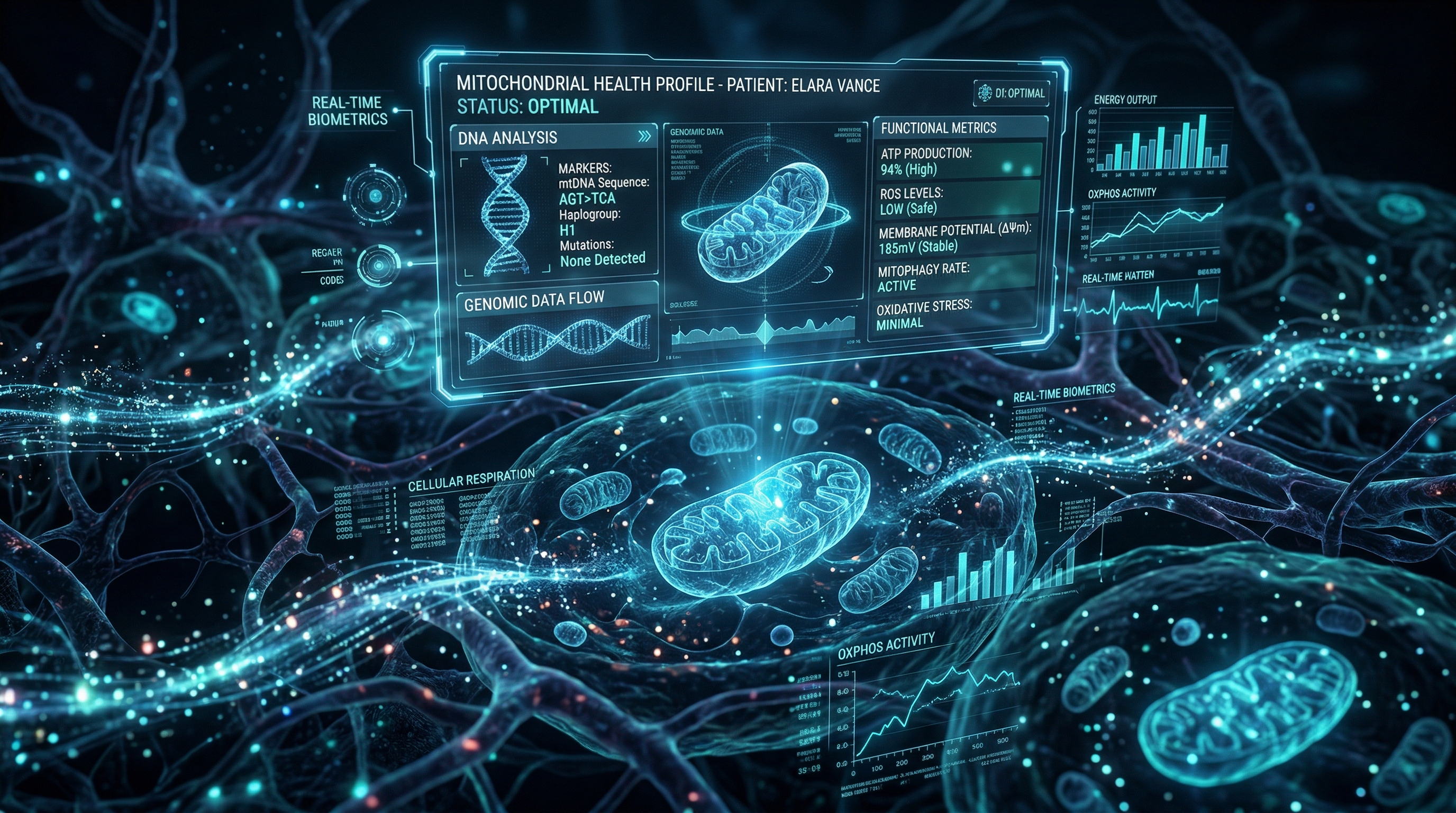
The Future of Personalized Mitochondrial Health
We're living through a quiet revolution in human health optimization. For decades, medicine treated the body as a black box — measure symptoms, diagnose disease, prescribe treatment. But a new paradigm is emerging, one that targets the most fundamental unit of biological function: the mitochondrion. And for the first time, the technology to assess and optimize mitochondrial health on an individual basis is moving from research labs into the real world.
This isn't about generic "boost your mitochondria" advice. It's about personalized, data-driven mitochondrial medicine — understanding your unique mitochondrial profile, tracking it over time, and tailoring interventions to your specific biology. Here's where the science stands and where it's heading.
Why Personalization Matters
Mitochondrial function varies enormously between individuals. Your mitochondrial capacity is shaped by genetics, age, lifestyle, environmental exposures, diet, stress history, and even your mother's mitochondrial DNA (which you inherit exclusively from her). Two people of the same age can have dramatically different mitochondrial efficiency — and a protocol that optimizes one person's cellular energy may do little for another.
Consider exercise. For someone with high baseline mitochondrial capacity, intense training may push OXPHOS efficiency to its limits and trigger beneficial biogenesis. For someone with existing mitochondrial dysfunction from chronic stress or metabolic disease, the same training could generate excessive ROS, causing more damage than benefit. Personalization means matching the intervention to the actual state of your mitochondria — not your age, your fitness level, or the latest trending protocol.
The Biomarker Revolution: What We Can Measure Now
Direct Mitochondrial Markers
The gold standard for assessing mitochondrial function has traditionally been a muscle biopsy followed by high-resolution respirometry — measuring oxygen consumption in isolated mitochondria under various substrate conditions. This gives detailed data on Complex I, Complex II, and overall OXPHOS capacity, but it's invasive, expensive, and impractical for routine monitoring.
Emerging non-invasive and minimally invasive approaches are changing this:
- Cytochrome c oxidase (CCO) oxidation state: CCO is the terminal enzyme of the electron transport chain. Its oxidation state directly reflects mitochondrial respiration. Broadband near-infrared spectroscopy (bNIRS) can measure CCO oxidation through the skin, offering a window into real-time mitochondrial function without a biopsy.
- NADH and FAD fluorescence: These electron carriers are central to mitochondrial metabolism. Their ratio reflects the redox state of the mitochondria — whether they're running efficiently or struggling.
- Lactate threshold testing: Dr. Iñigo San-Millán has championed lactate as the single most accessible biomarker of mitochondrial function. When mitochondria can't keep up with pyruvate oxidation, cells shift to glycolysis, producing lactate. A low lactate threshold (< 2 mmol/L at high workloads) indicates healthy mitochondria; a high threshold suggests dysfunction. He has called lactate "the key biomarker for longevity."
Circulating Biomarkers
Blood-based markers offer less direct but more convenient assessment:
- FGF21 (Fibroblast Growth Factor 21): Elevated levels signal mitochondrial stress and are associated with mitochondrial myopathies and metabolic dysfunction.
- GDF15 (Growth Differentiation Factor 15): A stress-responsive cytokine that rises in response to mitochondrial dysfunction. Being explored as a screening marker for mitochondrial disease.
- mtDNA copy number: Measured from cell-free DNA in blood, this reflects overall mitochondrial mass and can indicate compensatory biogenesis or depletion.
- Acylcarnitine profiles: These reflect the efficiency of fatty acid oxidation in mitochondria. Abnormal profiles indicate specific mitochondrial defects.
Emerging: Mitochondrial DNA Sequencing
Whole-mitochondrial genome sequencing is becoming affordable enough for clinical use. It can identify inherited variants that affect OXPHOS efficiency, somatic mutations accumulated through aging and oxidative damage, and heteroplasmy levels (the ratio of mutant to wild-type mtDNA within cells). In the future, regular mtDNA sequencing could track mutation accumulation as a biomarker of biological aging.
We're in an awkward transition: we can measure mitochondrial function in research settings with extraordinary precision, but translating those measurements into practical, affordable, individual-level monitoring is still a work in progress. The next five years will close much of this gap.
Wearable Technology: From Fitness Trackers to Mitochondrial Monitors
Near-Infrared Spectroscopy (NIRS) Wearables
The most promising wearable technology for mitochondrial monitoring is broadband NIRS (bNIRS). Unlike standard pulse oximeters that measure hemoglobin oxygenation, broadband NIRS can assess cytochrome c oxidase oxidation — a direct marker of mitochondrial respiration.
Several prototype devices are pushing this technology toward consumer readiness:
- MW-FlexNIRS: A low-cost, LED-based wearable that tracks CCO oxidation and tissue oxygenation during activity. Research shows it can measure mitochondrial oxygen consumption rates post-exercise, enabling individualized training zone determination.
- microCYRIL: A fiberless, dual-channel bNIRS device with compact CCD sensors designed for longitudinal mitochondrial monitoring. Still in the prototype phase but demonstrating feasibility for tracking age-related mitochondrial decline.
- Portable muscle NIRS (Moxy-like devices): Commercially available fitness tools that measure muscle oxygenation and can estimate oxidative capacity through incomplete recovery curves.
A key 2026 review in the Journal of Biomedical Optics noted that reproducible measurement of NIRS-derived mitochondrial oxidative capacity is achievable even in older adults — a critical validation for clinical and consumer use. The authors projected that consumer-grade bNIRS devices could reach the market by 2027–2028.
Sweat-Based Biosensors
Sweat carries a surprising amount of metabolic information. New wearable biosensors can continuously monitor:
- Lactate: Ultra-thin patches (like the PF-Sweat Patch, recognized at CES 2026) now monitor sweat lactate continuously, even in low-sweat conditions. Because lactate reflects mitochondrial overload, continuous tracking offers real-time feedback on cellular energy status during exercise and recovery.
- H2O2: Hydrogen peroxide in sweat is a proxy for mitochondrial ROS production. Non-invasive sensors that detect H2O2 in breath and sweat are being developed for respiratory and mitochondrial disease monitoring.
- Mitochondrial metabolites: Researchers are exploring panels of sweat metabolites that collectively reflect mitochondrial health — moving beyond single markers to integrated profiles.
Breath-Based Monitoring
Exhaled breath contains volatile organic compounds (VOCs) that reflect metabolic state. Breath acetone, in particular, tracks beta-oxidation — the mitochondrial pathway for burning fat. Wearable breath analyzers can already measure acetone in real-time, providing a non-invasive window into fatty acid oxidation efficiency.
Combined with HRV data from existing smartwatch platforms, these breath and sweat sensors could create a composite "mitochondrial health score" — a daily metric that tells you not just how many steps you took, but how efficiently your cells converted fuel into energy.
AI and Machine Learning: Making Sense of the Data
The real power of personalized mitochondrial health lies not in any single measurement, but in the integration of multiple data streams. AI and machine learning are essential for this:
- Pattern recognition across biomarkers: Machine learning models can identify mitochondrial dysfunction patterns from combinations of lactate curves, HRV data, sleep metrics, activity levels, and blood biomarkers that would be invisible to human analysis.
- Individual baseline calibration: AI can learn each person's unique mitochondrial profile over time, detecting deviations from their personal baseline rather than relying on population averages.
- Intervention optimization: By tracking how specific interventions (exercise, nutrition, photobiomodulation, ultrasound) affect an individual's mitochondrial markers over time, AI can recommend personalized protocols — essentially running continuous N-of-1 experiments.
- Disease prediction: Early research suggests that AI analysis of multi-omic data (genomics, metabolomics, proteomics) can predict mitochondrial disease risk years before clinical symptoms appear.
A 2024 review in Emerging Topics in Life Sciences described the impact of AI on mitochondrial biomarker development as "transformative," noting that machine learning approaches are already being used to identify novel mitochondrial disease biomarkers from blood and urine samples with high accuracy.
Targeted Interventions: Beyond Generic Supplementation
Personalized mitochondrial health doesn't stop at measurement. The same advances enabling individual assessment are also enabling more targeted interventions:
Ultrasonic Mitochondrial Stimulation
Non-invasive ultrasonic devices represent a new category of mitochondrial intervention. By delivering precisely calibrated acoustic energy to tissues, these devices can activate mechanotransduction pathways that enhance mitochondrial biogenesis, modulate inflammatory signaling through the vagus nerve, and improve cellular energy production without drugs or supplements.
The advantage of ultrasonic stimulation is its adaptability — parameters can be adjusted based on individual mitochondrial assessments, targeting the specific pathways (biogenesis, fusion/fission balance, antioxidant defense) that need support in a given person.
Photobiomodulation Protocols
Red and near-infrared light therapy devices are becoming more sophisticated, with wavelength, intensity, and pulse parameters that can be tuned to specific mitochondrial targets. Research is exploring whether different mitochondrial dysfunction profiles respond better to different photobiomodulation protocols — for example, whether Complex I deficiency benefits more from 810 nm light while Complex IV deficiency responds better to 670 nm.
Metabolic Cycling
Emerging protocols suggest that alternating between different metabolic states — feeding and fasting, carbohydrate and fat oxidation, exercise and rest — may optimize mitochondrial function by exercising different OXPHOS pathways. Personalized metabolic cycling, guided by real-time biomarker feedback (lactate, breath acetone, ketones), could become a cornerstone of mitochondrial optimization.
Nutrient Timing and Stacking
Generic "take CoQ10 and magnesium" advice is giving way to precision nutrition for mitochondria. Based on individual metabolic profiling, the future looks more like:
- "Your Complex I activity is 20% below optimal — supplement with NADH and CoQ10 in the morning with fat"
- "Your fatty acid oxidation efficiency is low — increase carnitine and time it 30 minutes before exercise"
- "Your NAD+ ratio is declining — cycle NMN for 3 weeks on, 1 week off, based on your methylation panel"
The Road Ahead: What to Expect by 2030
Based on current trajectories, here's what personalized mitochondrial health could look like within the next five years:
- Wearable bNIRS devices available for consumer purchase, providing daily CCO oxidation readings
- Sweat-based continuous monitoring integrated into fitness wearables, tracking lactate and ROS indicators in real-time
- AI-driven mitochondrial dashboards that aggregate data from wearables, periodic blood tests, and genetic profiles into actionable health scores
- Home-use ultrasonic and photobiomodulation devices with AI-guided protocols personalized to individual mitochondrial profiles
- Routine mtDNA sequencing as part of preventive health screening, identifying mutation accumulation and heteroplasmy shifts before disease manifests
- Integration with telemedicine — mitochondrial data flowing to clinicians who can intervene early on declining function
Some researchers have compared this moment to the early days of continuous glucose monitoring. Fifteen years ago, CGM was a niche technology for diabetics. Today, it's a mainstream biohacking tool used by healthy people to optimize metabolic health. Continuous mitochondrial monitoring could follow the same trajectory — from rare disease management to universal health optimization.
The Bigger Vision
Personalized mitochondrial health is more than a wellness trend. It represents a fundamental shift in how we understand and manage human biology. Instead of waiting for disease to manifest and then treating symptoms, we can monitor the cellular machinery that determines health at its most basic level — and intervene before problems cascade into clinical conditions.
Your mitochondria are not static. They respond to every choice you make — what you eat, how you move, how you sleep, how you manage stress. The future of health optimization is understanding those responses with precision, and using that understanding to live not just longer, but with more cellular energy, resilience, and vitality at every age.
The technology is converging. The science is maturing. The question isn't whether personalized mitochondrial health will become mainstream — it's how quickly we can make it accessible, affordable, and accurate enough to fulfill its promise.
References
- PubMed PMID: 41035543. "Broadband NIRS for wearable mitochondrial assessment."
- PMC12762855. "Emerging non-invasive approaches to mitochondrial health monitoring."
- PMC5562388. "NIRS measurement of cytochrome c oxidase and tissue oxygenation."
- Biomedical Optics Express 17(4):1649. "MW-FlexNIRS: Low-cost wearable for CCO and muscle metabolism."
- ResearchGate (2023). "Reproducibility of NIRS-derived mitochondrial oxidative capacity in older adults."
- PMC7393938. "Portable NIRS for muscle oxidative capacity assessment."
- CES 2026 Innovation Awards. "PF-Sweat Patch: Non-invasive continuous lactate sensor."
- Penn State Research News. "Non-invasive sweat lactate detection at minimal perspiration rates."
- Sensors and Actuators B: Chemical (2025). "Enzyme-free Cu-based lactate sensors for real-time tracking."
- The Proof podcast. Dr. Iñigo San-Millán on lactate as the key biomarker for metabolic health and longevity.
- Emerging Topics in Life Sciences 8(2):89. "The impact of artificial intelligence on mitochondrial biomarker development."
- PMC11935081. "Breath acetone monitoring for fatty acid oxidation assessment."
- MitoCanada (2024). "Healthcare trends in mitochondrial disease monitoring."