Bioelectric Medicine: How Electrical Signals Control Healing
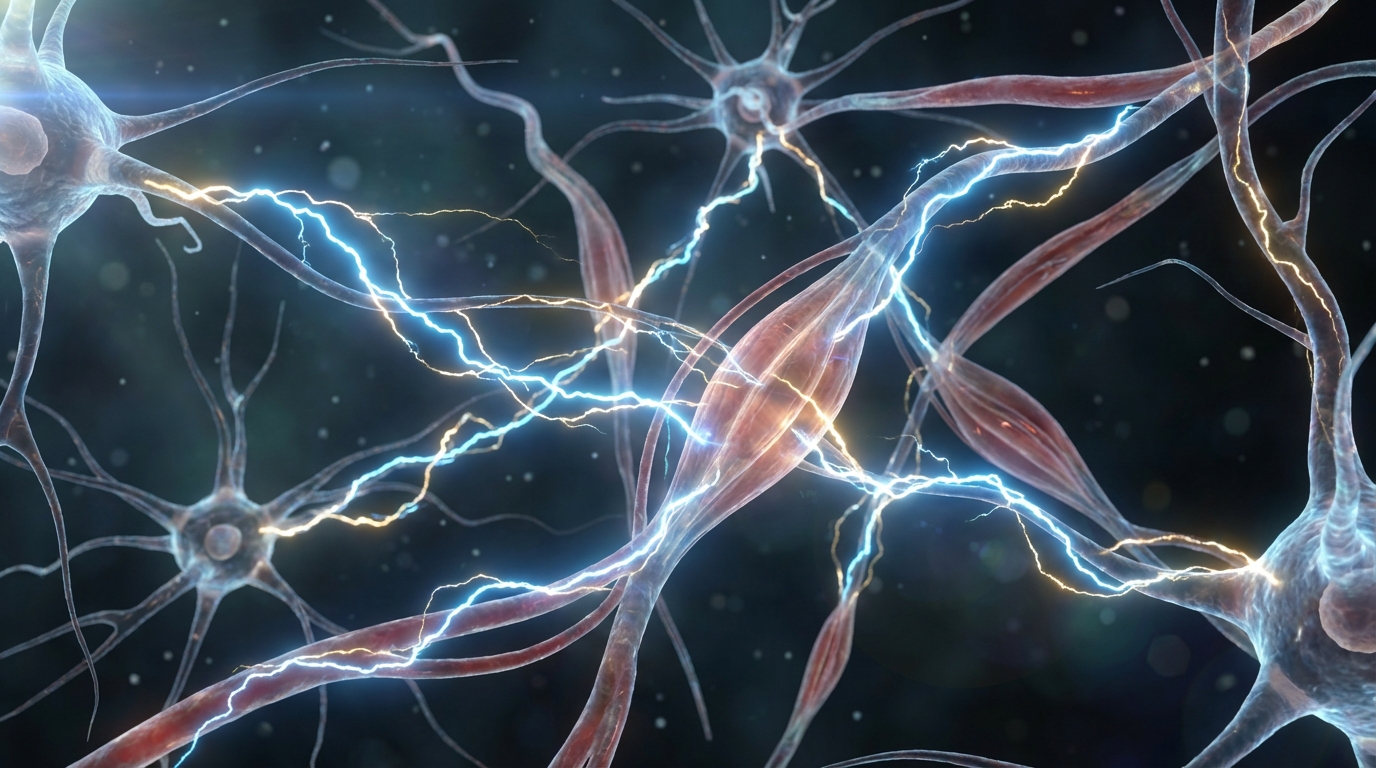
Long before the first neurons fired in an ancient brain, single-celled organisms were using electrical gradients to communicate. Voltage is not a nervous system invention — it is a fundamental property of living cells. Today, a new field called bioelectric medicine is learning to read and write these cellular electrical signals to control healing, regeneration, and disease.
The Bioelectric Code
Every cell in your body maintains a membrane voltage — a difference in electrical charge between the inside and outside of the cell. This voltage, typically between -40 and -90 millivolts, is not just a byproduct of ion channel activity. It is an information-carrying signal that tells cells what to become, where to go, and when to divide.
Research from Michael Levin's lab at Tufts University has revealed that bioelectric patterns form a kind of "morphogenetic code" — a pre-pattern that tells tissues what large-scale structure to build. Change the bioelectric pattern, and you change the body plan.
"We discovered that you can rewrite the pattern memory of tissues. You don't need to micromanage every cell — you set the bioelectric goal state, and the tissue does the rest." — Michael Levin
Wound Healing and Regeneration
When tissue is damaged, a characteristic electrical wound current flows from the wound edge. This current is not merely a consequence of injury — it is an active healing signal. Species that regenerate well (like salamanders and planaria) have much stronger wound currents than species that scar.
- Voltage gradients guide cell migration: Cells move toward regions of specific voltage (galvanotaxis)
- Membrane potential controls proliferation: Depolarization triggers cell division; hyperpromotes differentiation
- Bioelectric signals specify identity: The same voltage pattern that says "become an eye" can be artificially imposed to grow eyes in unusual locations
Cancer as a Bioelectric Disease
One of the most striking findings in bioelectric medicine is that cancer appears to be, at least in part, a disease of aberrant bioelectric signaling. Tumor cells are consistently depolarized (more positive inside) compared to normal cells. This depolarization is not just a consequence of cancer — it actively promotes tumor growth and metastasis.
Experiments have shown that forcing tumor cells to repolarize (become more negative) can suppress tumor growth, even without killing the cells. The cells essentially "remember" their normal identity when the correct bioelectric signal is restored.
Clinical Applications Emerging Now
Bioelectric medicine is already entering clinical practice in several forms:
- Vagus nerve stimulation (VNS): FDA-approved for epilepsy, depression, and inflammation
- Electrical wound healing: Devices that apply microcurrents to chronic wounds accelerate closure by 50-80%
- Bone growth stimulation: Pulsed electromagnetic fields (PEMF) promote fracture healing
- Optogenetics: Light-controlled ion channels allow precise bioelectric manipulation in research
The Future: Programming Cellular Behavior
The ultimate promise of bioelectric medicine is the ability to program cellular behavior at the tissue level — to specify not what each individual cell does, but what the collective should build. This is the difference between micromanaging a construction crew and handing them an architectural blueprint.
If we can learn to read and write the bioelectric code, we may be able to trigger limb regeneration, reverse aging, suppress cancer, and repair birth defects — not by editing genes or adding drugs, but by restoring the electrical instructions that tissues already know how to follow.