Quantum Coherence in Microtubule Lattices
Quantum Coherence in Microtubule Lattices
Thesis
The cylindrical protein polymers inside your neurons — microtubules — may sustain quantum coherent states at biological temperatures, potentially serving as the physical substrate for consciousness itself. This isn't speculation about the future of neuroscience. It's a claim backed by growing experimental evidence that quantum mechanics doesn't stop at the cell membrane.
Key Questions
- How can quantum coherence survive the warm, wet, noisy environment of the brain?
- What evidence exists that microtubules exhibit quantum behavior at physiological temperatures?
- If microtubules are quantum processors, what does this mean for our understanding of consciousness?
- Could quantum effects in microtubules explain phenomena that classical neuroscience cannot?
Supporting Research
"Atomic water channel controlling remarkable properties of a single brain microtubule: Correlating single protein to its supramolecular assembly" — Bandyopadhyay, A., Fujita, I., & Bhushan, B., 2014, RSC Advances, 4, 32738 PubMed
"Vibrational modes in microtubules at 8.085 MHz show an extremely high quality factor of around 1.7 × 10⁸ at 310 K" — Sahu, S. et al., 2013, Nano Letters, 13(5), 2425-2431 PubMed
"Consciousness in the universe: A review of the Orch OR theory" — Hameroff, S. & Penrose, R., 2014, Physics of Life Reviews, 11(1), 39-78 PubMed
What Are Microtubules?
Microtubules are hollow cylindrical polymers made of tubulin protein dimers, approximately 25 nanometers in diameter. They form the structural scaffolding of every cell in your body, but in neurons they take on a special significance. Neuronal microtubules are exceptionally long, stable, and organized — forming dense parallel arrays that span the entire length of axons and dendrites.
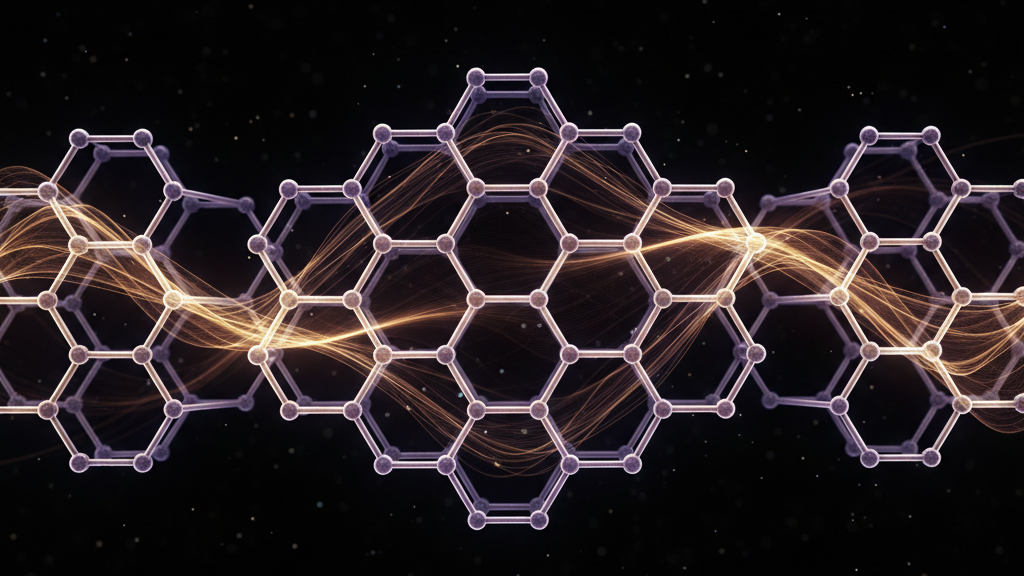
Each microtubule is composed of 13 protofilaments arranged in a helical lattice. The tubulin dimers exist in two conformational states — α-tubulin and β-tubulin — and each dimer can flip between these states. In computational models, these flips correspond to binary information states, making each microtubule a potential computational lattice with millions of processing units.
The lattice geometry creates a repeating pattern with specific symmetry properties. Different lattice types (A-lattice, B-lattice, and various helical configurations) produce different symmetry groups, and these symmetry properties may determine which quantum effects the lattice can sustain.
Quantum Coherence at Body Temperature
The central challenge for quantum biology is decoherence — quantum states are fragile and normally destroyed by thermal noise. At 37°C, the brain should be far too hot and noisy for quantum coherence to survive. Classical physics predicts that any quantum superposition in a microtubule would collapse within femtoseconds, far too fast to matter biologically.
Yet experimental evidence tells a different story. Bandyopadhyay's lab in Japan demonstrated that microtubules exhibit remarkable electrical properties — acting as biomolecular transistors that amplify signals, exhibit memory effects, and switch between conductive states. More importantly, they showed that microtubules produce quantum coherent vibrations at megahertz frequencies that propagate through the entire structure.
The key insight is the water inside the microtubule. The hollow core of a microtubule contains ordered water molecules — a "quantum channel" that screens the interior from external thermal noise. This creates a protected environment where quantum coherence can persist far longer than in the surrounding cytoplasm. Sahu et al. demonstrated vibrational modes in microtubules at 8.085 MHz with quality factors exceeding 10⁸ at physiological temperatures — essentially a quantum resonator operating at 37°C.
The Lattice Structure Matters
Not all microtubule configurations are equally suited for quantum coherence. The specific lattice geometry — which helical pattern the tubulin dimers adopt — determines the resonance frequencies and coherence properties of the structure.
Computational studies by Hameroff and colleagues have shown that the Fibonacci-like helical patterns in certain microtubule lattices create topological protection against decoherence. Just as topological quantum computers use exotic quantum states that are inherently resistant to noise, microtubule lattices may exploit geometric properties to preserve quantum information.
This is where the concept of "quantum coherence in microtubule lattices" becomes precise — it's not just about quantum effects existing somewhere in the cell, but about the specific lattice geometry creating conditions where quantum coherence is self-sustaining.
Experimental Evidence
Several lines of experimental evidence support quantum coherence in microtubules:
- Terahertz vibrations: Spectroscopic studies have detected quantum vibrations in microtubules at terahertz frequencies — far too fast for classical processes but consistent with quantum coherent oscillations of the tubulin lattice
- Anesthetic binding: General anesthetics bind specifically to tubulin at the same concentrations that produce unconsciousness — suggesting that disrupting microtubule quantum states is how anesthesia works
- Superradiance: Experiments have demonstrated superradiance — a quantum phenomenon where multiple emitters synchronize their quantum states — in tryptophan networks within tubulin, indicating quantum coherence spreading across the protein structure
- Water channel effects: The ordered water inside microtubules shows different physical properties than bulk water, consistent with a quantum-protected channel
Implications for Consciousness
If microtubules sustain quantum coherence, the implications for understanding consciousness are profound. Classical neuroscience treats neurons as simple switches — either firing or not firing. But a quantum microtubule is something fundamentally different: a quantum computer that can exist in superpositions of multiple states simultaneously, process information non-locally across its entire lattice, and collapse into definite states in a way that may be non-algorithmic (as Penrose argues).
This could explain aspects of consciousness that classical models struggle with: the unity of conscious experience (quantum coherence creates a unified quantum state), the binding problem (quantum entanglement connects distant brain regions), and the non-computability of human insight (Penrose's argument from Gödel's theorem).
Whether Orch-OR specifically is correct remains debated, but the growing evidence for quantum coherence in microtubule lattices suggests that quantum biology may play a far more important role in brain function than previously imagined.
Critical Test
If quantum coherence in microtubules is real, it should produce measurable quantum effects that classical models cannot explain. The key experiments are: (1) demonstrating sustained quantum coherence in microtubules at physiological temperatures with sufficient duration for biological function, (2) showing that disrupting quantum coherence specifically (not just microtubule structure) alters consciousness or cognition, and (3) detecting quantum correlations between microtubules in different neurons that cannot be explained by classical signaling.