Dysautonomia: A Clinical Map for Practitioners Beyond POTS
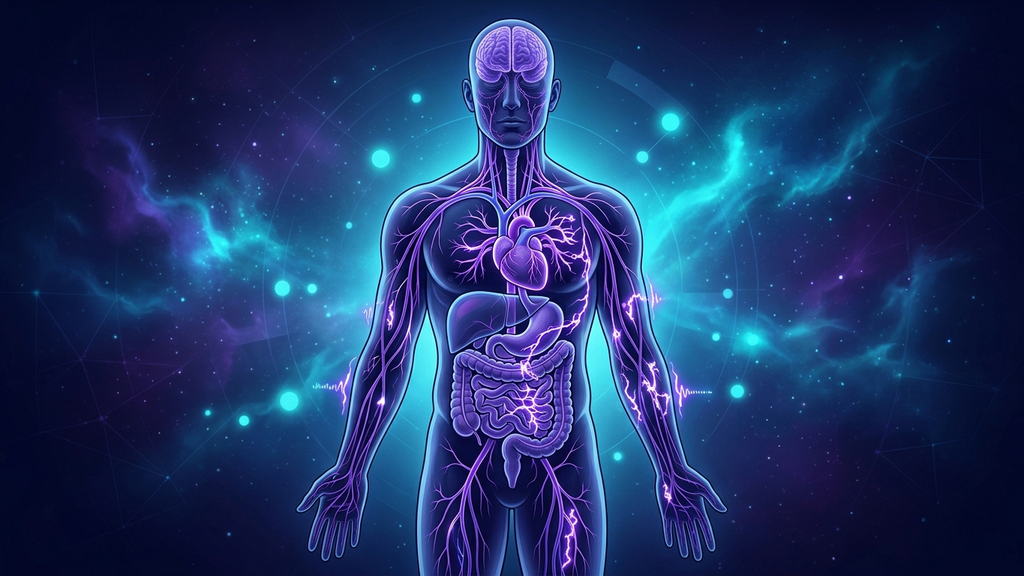
"Dysautonomia" arrives in the intake box constantly, and it is one of the most searched-yet-underserved terms our clients use. The trouble is that it names a category, not a condition — like saying "arthritis" without specifying which joint or mechanism. For practitioners, the value is in decomposing it: which branch of the autonomic nervous system is misbehaving, in which direction, and why.
The Autonomic System Has Multiple Failure Modes
The autonomic nervous system regulates heart rate, blood pressure, digestion, temperature, sweating, pupil response, bladder, and more — mostly below conscious awareness. Dysautonomia simply means one or more of those regulatory loops has lost its precision. Critically, the branches can fail independently. A client can have a hyperadrenergic cardiovascular system and a hypoactive gut simultaneously, which looks contradictory until you map it out.
A Working Taxonomy
Orthostatic intolerance (the cardiovascular story)
This is the most recognized cluster — POTS, orthostatic hypotension, orthostatic hypertension. The common thread is a failure to maintain cerebral perfusion against gravity. Symptoms: lightheadedness on standing, palpitations, "coat-hanger" neck and shoulder pain from reduced perfusion, brain fog, exercise intolerance.
Gastrointestinal dysautonomia
The gut is the largest autonomic territory, and vagal regulation of motility is easily disrupted. Presentations: early satiety and gastroparesis (too little motility), or the opposite, plus reflux, bloating, and unpredictable bowel patterns.
Sudomotor and thermoregulatory dysfunction
Abnormal sweating — too much, too little, or patchy — and poor temperature control, including the cold extremities so many clients mention. Often overlooked, but a useful clue that the dysautonomia is small-fiber in origin.
Secretomotor and pupillary signs
Dry eyes and mouth, abnormal pupil responses to light. Easy to test, easy to miss.
The Upstream Drivers Worth Investigating
Dysautonomia is usually secondary. The practitioner's job is to ask what is driving it:
- Small-fiber neuropathy — autoimmune, metabolic, or post-viral damage to the thin autonomic nerves.
- Post-viral autonomic injury — increasingly common; the "viral autonomic tachycardia" and long-COVID presentations are real and mechanistically autonomic.
- Connective tissue laxity — hypermobility and EDS predispose to blood pooling and autonomic instability.
- Mast cell activation — mediator release directly destabilizes vascular tone and heart rate.
- Chronic sympathetic overdrive — the trauma and chronic-stress pathway, which degrades vagal regulation over time.
Principles of Management
Because the branches fail independently, treatment must be targeted, not generic. But two principles apply broadly. First, restore vagal regulatory tone — this is the common denominator that stabilizes multiple branches at once, and it is where breath training, non-invasive vagus nerve stimulation, and focused ultrasound neuromodulation are earning growing evidence. Second, address the bioenergetic floor: autonomic regulation is metabolically demanding, and clients with poor mitochondrial capacity cannot sustain it. Volume expansion, graded recumbent-to-upright exercise, and mast cell stabilization fill in the condition-specific gaps.
Clinical takeaway: Never treat "dysautonomia" as one thing. Map which branches are involved and in which direction, hunt for the upstream driver, and use vagal-tone restoration as the common stabilizer across an otherwise heterogeneous picture.
References
- Goldstein DS. "Principles of Autonomic Medicine." National Institutes of Health, 2020.
- Novak P. "Autonomic disorders." American Journal of Medicine, 2019;132(4):420-436.
- Vernino S et al. "Autonomic manifestations of post-acute sequelae of SARS-CoV-2 infection." Clinical Autonomic Research, 2022;32(4):287-289.
- Kaufmann H, Norcliffe-Kaufmann L, Palma JA. "Baroreflex dysfunction." New England Journal of Medicine, 2020;382(2):163-178.