Gut Motility and the Migrating Motor Complex: The Vagal Housekeeper
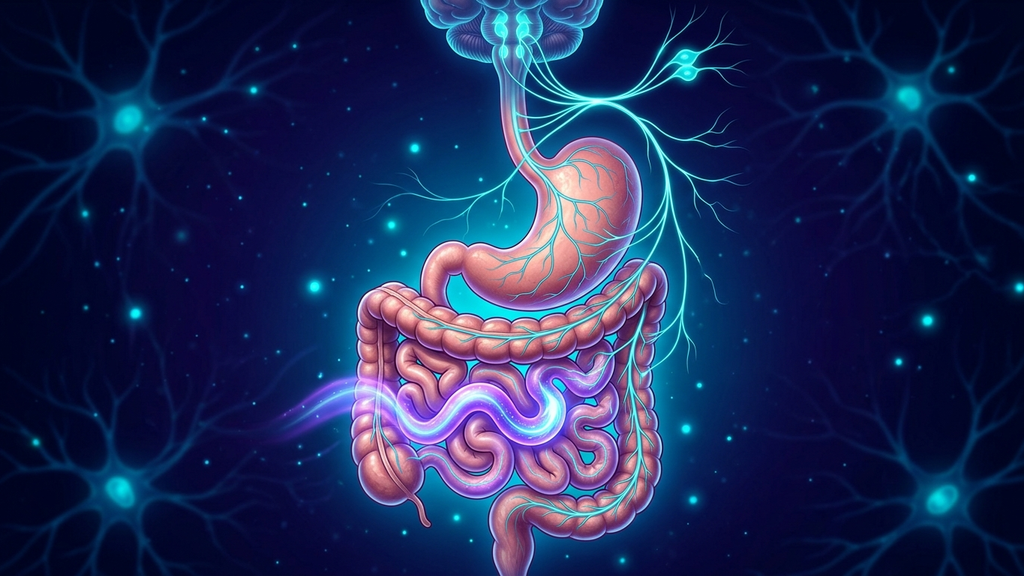
Motility and gut health are among the clearest content gaps in the intake data — clients report bloating, fullness, and sluggish or erratic digestion constantly, yet the mechanism is rarely explained to them. The concept that unlocks most of these cases for a practitioner is the migrating motor complex, the gut's between-meal housekeeping wave, and its dependence on vagal tone.
The Housekeeper Wave
The migrating motor complex (MMC) is a cyclical pattern of electrical and mechanical activity that sweeps through the stomach and small intestine during fasting — roughly every 90 to 120 minutes between meals and overnight. Its job is housekeeping: clearing residual food, debris, and bacteria from the upper gut and moving them downstream. When the MMC runs well, the small intestine stays relatively clean. When it stalls, contents stagnate, and that stagnation is the substrate for bacterial overgrowth, fermentation, gas, and bloating.
Why the MMC Stalls
Two things reliably suppress the MMC, and both are common in the clients we see. First, eating: the MMC only runs in the fasted state, so constant grazing never lets the wave initiate. Second — and this is the practitioner's leverage point — low vagal tone. The MMC is heavily regulated by vagal input and the enteric nervous system. In a client stuck in sympathetic dominance, "rest and digest" motility is suppressed, and the housekeeper simply doesn't show up for work.
The SIBO Connection Most Clients Miss
Small intestinal bacterial overgrowth is frequently downstream of impaired motility, not a random infection. When the MMC fails to sweep the small intestine, bacteria that belong further down colonize where they shouldn't. This reframes treatment: killing the bacteria without restoring the sweeping mechanism guarantees recurrence. The clients who relapse repeatedly after antibiotics are usually the ones whose motility was never addressed.
The Gastroparesis End of the Spectrum
At the more severe end, frank delayed gastric emptying — early satiety, nausea, food "sitting" — represents the same vagal-motility failure expressed in the stomach. Diabetic and post-viral vagal injury are common causes, and the shared thread with the milder bloating presentations is impaired vagal drive of motility.
Restoring the Wave
- Space meals. Allowing 4-5 hours between meals and an overnight fast gives the MMC windows to actually run. This single change resolves a surprising number of bloating cases.
- Down-regulate before eating. A few slow breaths before meals shifts the client into the parasympathetic state where digestion and motility function.
- Raise vagal tone systemically. Breath practice, and for resistant cases non-invasive vagus nerve stimulation or focused ultrasound neuromodulation, to restore the drive behind the wave.
- Sequence SIBO treatment correctly. Address motility as part of — not after — antimicrobial treatment to prevent the relapse cycle.
Clinical takeaway: Bloating and sluggish digestion are often a stalled migrating motor complex, and the MMC runs on vagal tone and the fasted state. Space meals, restore vagal drive, and treat SIBO as a motility problem — not just a bacterial one — to stop the relapse cycle.
References
- Deloose E et al. "The migrating motor complex: control mechanisms and its role in health and disease." Nature Reviews Gastroenterology & Hepatology, 2012;9(5):271-285.
- Pimentel M et al. "ACG Clinical Guideline: Small Intestinal Bacterial Overgrowth." American Journal of Gastroenterology, 2020;115(2):165-178.
- Browning KN, Travagli RA. "Central nervous system control of gastrointestinal motility and secretion." Comprehensive Physiology, 2014;4(4):1339-1368.
- Camilleri M. "Gastrointestinal motility disorders in neurologic disease." Journal of Clinical Investigation, 2021;131(4):e143771.