Mitochondria 101: The Powerhouses That Control Your Health
Mitochondria 101: The Powerhouses That Control Your Health
You learned in biology class that mitochondria are the "powerhouses of the cell." That description is accurate — but it dramatically undersells what these tiny organelles actually do. Mitochondria don't just produce energy. They regulate aging, control cell death, influence inflammation, and may hold the key to understanding why some people thrive while others struggle with fatigue, brain fog, and chronic disease.
If you've ever wondered why you feel drained even after a full night's sleep, or why your body seems to be aging faster than it should — the answer might be written in the DNA of your mitochondria.
What Exactly Are Mitochondria?
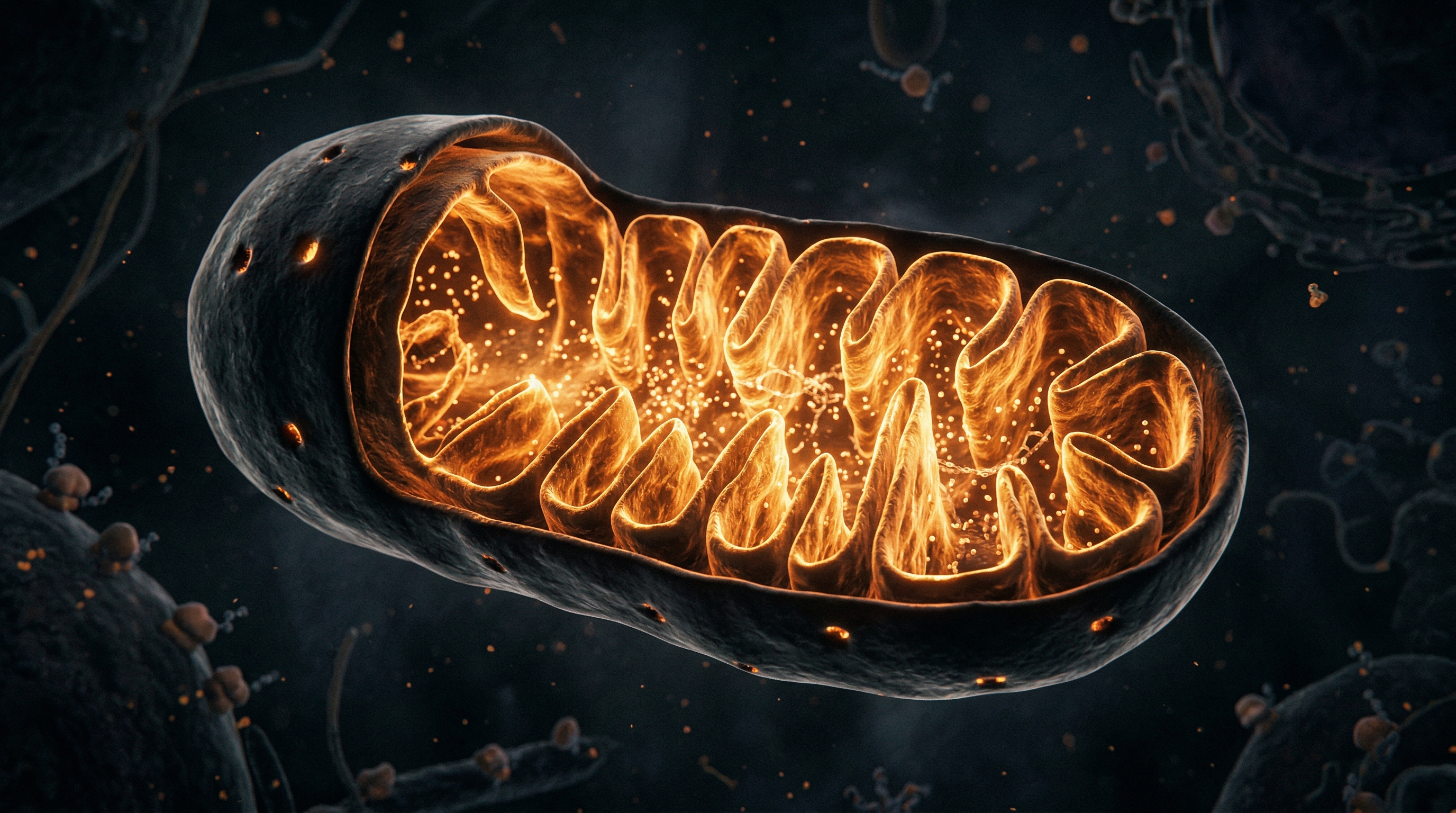
Mitochondria are small, bean-shaped organelles found in nearly every cell of your body. A single human cell can contain anywhere from a few hundred to over a thousand mitochondria, depending on the cell's energy demands. Heart muscle cells, liver cells, and neurons are especially dense with them.
What makes mitochondria unique among cellular structures is that they carry their own DNA — a small, circular genome inherited entirely from your mother. Mitochondrial DNA (mtDNA) encodes 13 proteins essential for energy production, along with the transfer RNAs and ribosomal RNAs needed to build them within the organelle itself.
This genetic independence hints at mitochondria's ancient origin. According to the endosymbiotic theory, mitochondria were once free-living bacteria that were engulfed by an ancestral cell roughly two billion years ago. Instead of being digested, they formed a partnership — providing energy in exchange for shelter and nutrients. That partnership became permanent, and every complex life form on Earth carries the legacy of that original merger.
The Engine of Energy: How Mitochondria Produce ATP
The primary job of mitochondria is to generate adenosine triphosphate (ATP), the molecular currency of energy that powers virtually every process in your body — from muscle contraction to nerve signaling to DNA repair.
This process, called oxidative phosphorylation, unfolds across the inner mitochondrial membrane through a series of protein complexes known as the electron transport chain (ETC). Here's a simplified version of what happens:
- Fuel enters the system. Glucose and fatty acids are broken down into acetyl-CoA, which feeds into the Krebs cycle (citric acid cycle) inside the mitochondrial matrix. This cycle generates electron carriers — NADH and FADH₂.
- Electrons flow. NADH and FADH₂ donate electrons to the ETC, which passes them through four protein complexes (I, II, III, and IV). As electrons move, protons are pumped across the inner membrane, creating an electrochemical gradient.
- ATP is synthesized. The proton gradient drives ATP synthase (Complex V), a molecular turbine that rotates to combine ADP and inorganic phosphate into ATP. A single molecule of glucose can yield approximately 30–36 ATP molecules through this process.
This is remarkably efficient compared to anaerobic glycolysis, which produces only 2 ATP per glucose molecule. But it comes with a trade-off: oxidative phosphorylation generates reactive oxygen species (ROS) as a byproduct — and that's where the relationship between mitochondria and aging gets complicated.
Beyond Energy: The Other Roles of Mitochondria
Calling mitochondria mere powerhouses is like calling the brain merely a thinking organ. In reality, mitochondria are deeply involved in:
Cell Death (Apoptosis)
Mitochondria are central gatekeepers of programmed cell death. When a cell is damaged beyond repair, mitochondria release cytochrome c into the cytoplasm, triggering a cascade of caspase enzymes that systematically dismantle the cell. This controlled demolition is essential for removing dysfunctional cells — but when it goes wrong, it contributes to diseases ranging from cancer (too little apoptosis) to neurodegeneration (too much).
Calcium Signaling
Mitochondria act as calcium buffers, absorbing excess calcium ions from the cytoplasm and releasing them when needed. Calcium signaling regulates muscle contraction, neurotransmitter release, hormone secretion, and gene expression. Mitochondrial calcium dysregulation is implicated in heart disease, diabetes, and neurological disorders.
Inflammation Regulation
When mitochondria are damaged, they release mitochondrial DNA and other components into the cytoplasm. The immune system recognizes these as damage-associated molecular patterns (mtDAMPs), triggering inflammatory responses through pathways like cGAS-STING. Chronic mitochondrial damage can thus fuel low-grade systemic inflammation — what researchers call "inflammaging" — a driver of age-related disease.
Biosynthesis
Mitochondria are also factories for producing heme (needed for hemoglobin), steroid hormones (including cortisol and estrogen), iron-sulfur clusters (essential for enzyme function), and parts of certain amino acids. They are metabolic hubs, not just energy plants.
When Mitochondria Fail: The Link to Disease
Given their central role, it's no surprise that mitochondrial dysfunction appears in a stunning range of diseases. But the relationship isn't always straightforward.
Aging
The mitochondrial free radical theory of aging, first proposed by Denham Harman in the 1950s and refined over subsequent decades, suggests that ROS generated by mitochondrial metabolism gradually damage mtDNA, proteins, and lipids. Because mtDNA has limited repair mechanisms and sits close to the ETC — the very source of free radicals — it's especially vulnerable. Over time, damaged mitochondria produce less ATP and more ROS, creating a vicious cycle.
Studies in Polγ "mutator" mice — engineered to accumulate mtDNA mutations rapidly — show premature aging phenotypes including hair loss, osteoporosis, and shortened lifespan. However, the picture is more nuanced than simple ROS damage: recent research highlights roles for mitochondrial metabolites (like NAD⁺), signaling peptides (humanin, MOTS-c), and the mitochondrial unfolded protein response in aging trajectories.
Neurodegenerative Disease
Alzheimer's disease, Parkinson's disease, Huntington's disease, and ALS all show distinct patterns of mitochondrial dysfunction. In Parkinson's, Complex I deficiency in the substantia nigra is a well-documented finding. In Alzheimer's, reduced mitochondrial fusion protein MFN2 and impaired glucose metabolism precede amyloid plaque formation by years.
Metabolic Disease
Type 2 diabetes involves mitochondrial dysfunction in pancreatic beta cells and skeletal muscle, reducing insulin secretion and glucose uptake. Obesity itself can overwhelm mitochondrial capacity with excess fatty acids, leading to incomplete oxidation and lipotoxic intermediates that damage cells.
Chronic Fatigue
Emerging research in myalgic encephalomyelitis/chronic fatigue syndrome (ME/CFS) consistently finds reduced ATP production, impaired Complex V activity, and abnormal lactate accumulation. A 2020 systematic review identified mitochondrial abnormalities across 25 studies in ME/CFS patients.
Can You Support Your Mitochondria?
The encouraging news: mitochondria are dynamic organelles that respond to lifestyle signals. The molecular pathways that regulate mitochondrial health — AMPK, SIRT1, PGC-1α — are activated by specific behaviors:
- Exercise is the most potent known stimulus for mitochondrial biogenesis (creating new mitochondria) and quality control. Both endurance and high-intensity training upregulate PGC-1α, the master regulator of mitochondrial gene expression.
- Fasting and caloric restriction activate AMPK and SIRT1, promoting mitophagy (clearing damaged mitochondria) and biogenesis.
- Cold exposure stimulates mitochondrial biogenesis in brown adipose tissue through PGC-1α and UCP1 expression.
- Sleep is when mitochondrial repair and turnover are most active.
Specific nutrients also play supporting roles: CoQ10 (electron transport), NAD⁺ precursors like NMN and NR (sirtuin activation), PQQ (biogenesis signaling), and magnesium (ATP stabilization).
The bottom line: Your mitochondria are not static structures that simply decline with age. They are responsive, adaptable organelles that shape — and are shaped by — how you live. Understanding them is the first step toward supporting them.
What's Ahead
In the posts that follow, we'll dive deeper into specific aspects of mitochondrial health: how dysfunction drives chronic fatigue, what mitochondria do in the brain, what cold exposure actually does to these organelles, and the evidence behind strategies for growing new mitochondria. Each post will ground its claims in published research — because when it comes to your cellular health, you deserve more than hype.
Your mitochondria have been keeping you alive for every second of your existence. It might be time to return the favor.
References
- Sun N, Youle RJ, Finkel T. "The Mitochondrial Basis of Aging." Molecular Cell, 2016;61(5):654-666.
- Picard M, Wallace DC, Burelle Y. "The Rise of Mitochondria in Medicine." Mitochondrion, 2016;30:105-116.
- Kauppila TES, Kauppila JHK, Larsson NG. "Mammalian Mitochondria and Aging." Cell Metabolism, 2017;25(2):297-310.
- Bratic A, Larsson NG. "The Role of Mitochondria in Aging." Journal of Clinical Investigation, 2013;123(3):951-957.
- Harman D. "Aging: A Theory Based on Free Radical and Radiation Chemistry." Journal of Gerontology, 1956;11(3):298-300.
- Nunnari J, Suomalainen A. "Mitochondria: In Sickness and in Health." Cell, 2012;148(6):1145-1159.
- Holden S et al. "Systematic Review of Mitochondrial Abnormalities in Myalgic Encephalomyelitis/Chronic Fatigue Syndrome." Journal of Translational Medicine, 2020;18:290.