Neuroplasticity and Mitochondrial Energy: The Fuel Behind Brain Rewiring
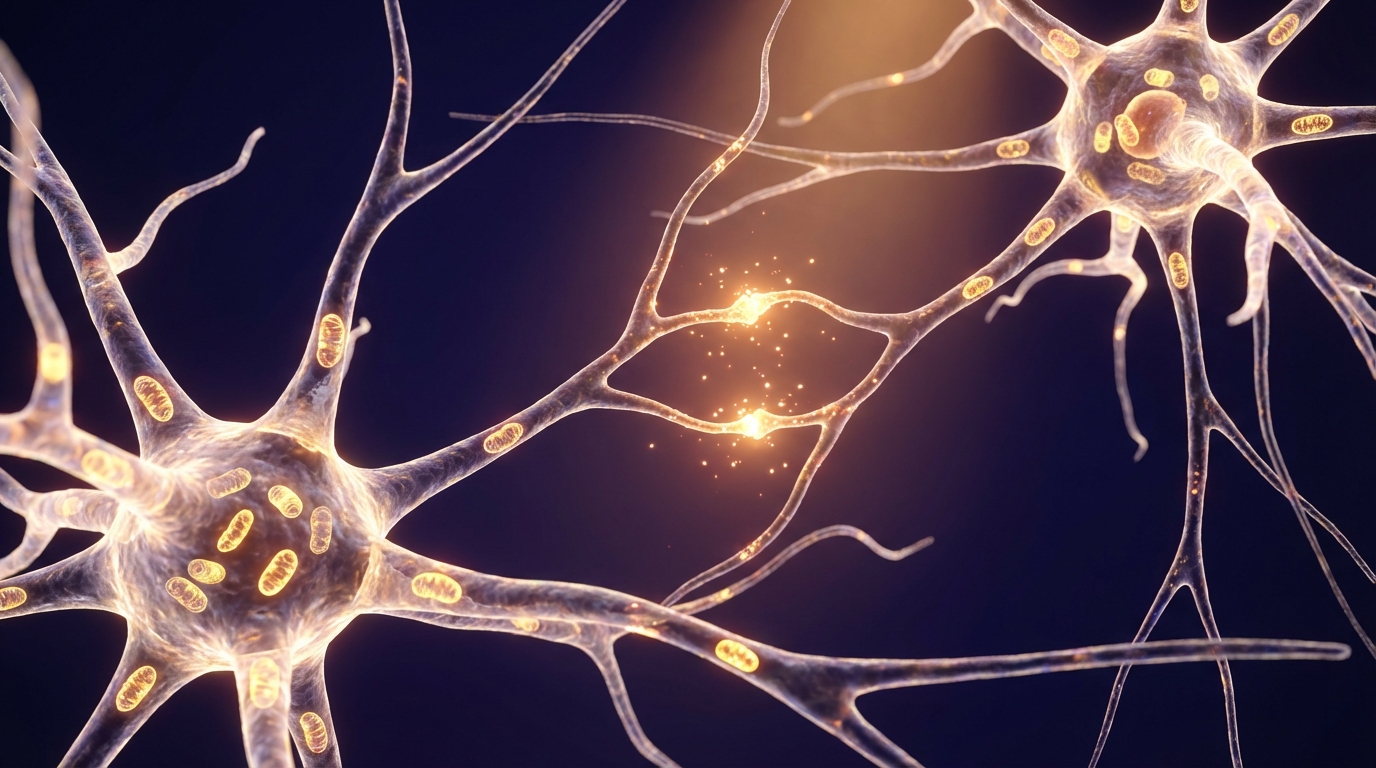
Neuroplasticity — the brain's ability to form new connections and reorganize itself — is one of the most celebrated properties of the nervous system. But forming new synapses, strengthening existing ones, and pruning unnecessary connections all require enormous amounts of energy. The limiting factor in neuroplasticity may not be the brain's wiring diagram — it may be the mitochondria that power it.
The Energy Cost of a Synapse
A single synaptic transmission costs approximately 10,000 ATP molecules. Your brain performs roughly 10¹⁶ synaptic operations per second, consuming about 20% of your total body energy despite being only 2% of your body weight. Neuroplasticity — the strengthening, weakening, creation, and elimination of synapses — is even more energetically expensive than routine neural activity.
Long-term potentiation (LTP), the cellular mechanism underlying learning and memory, requires:
- Glutamate release: ATP-dependent vesicle loading and calcium-triggered exocytosis
- Receptor trafficking: AMPA receptors must be inserted into the postsynaptic membrane via ATP-driven motor proteins
- Protein synthesis: New synaptic proteins are manufactured locally at the synapse using mitochondrial ATP
- Structural remodeling: Actin polymerization to grow new dendritic spines requires GTP (generated by mitochondria)
Mitochondria Move to Active Synapses
One of the most remarkable discoveries in recent neuroscience is that mitochondria are not static organelles — they actively transport to synapses that need energy. When a synapse is being potentiated, motor proteins carry mitochondria along microtubules to the active site, providing local ATP production exactly where it's needed.
"Mitochondrial trafficking to synapses is activity-dependent and essential for sustained synaptic plasticity. Without adequate mitochondrial delivery, LTP fails within minutes." — Science, 2024
This has profound implications: the rate-limiting step in learning may not be the availability of neural circuits, but the ability of mitochondria to reach and supply energy to the right synapses.
Mitochondrial Dynamics Shape Plasticity
Mitochondria are not just power plants — they are dynamic organelles that constantly fuse and divide. This process, called mitochondrial dynamics, directly influences synaptic plasticity:
- Fusion (mitofusin 1/2, OPA1): Combines mitochondria to share contents and maintain function. Promotes synaptic stability.
- Fission (DRP1): Divides mitochondria to enable transport to distant synapses. Essential for new synapse formation.
- Mitophagy (PINK1/Parkin): Removes damaged mitochondria. Failure leads to accumulation of dysfunctional organelles and impaired plasticity.
When Mitochondrial Energy Limits Neuroplasticity
Several conditions reveal what happens when mitochondrial energy supply can't keep up with plasticity demands:
- Chronic stress: Cortisol damages hippocampal mitochondria, impairing LTP and memory formation
- Aging: Mitochondrial DNA mutations accumulate, reducing ATP output and slowing cognitive adaptation
- ME/CFS: Mitochondrial dysfunction is a leading hypothesis for the cognitive "brain fog" in chronic fatigue
- Neurodegeneration: Mitochondrial failure precedes synaptic loss in Alzheimer's, Parkinson's, and ALS
Boosting Mitochondrial Support for Plasticity
If neuroplasticity is energy-limited, then interventions that improve mitochondrial function should enhance brain rewiring. Evidence supports this:
- Aerobic exercise: Increases hippocampal mitochondrial biogenesis and doubles the rate of new neuron formation
- Intermittent fasting: Activates AMPK and PGC-1α, promoting mitochondrial biogenesis
- NMN/NR supplementation: Restores NAD+ levels, improving mitochondrial electron transport efficiency
- Red light therapy (660-810 nm): Directly stimulates cytochrome c oxidase in the electron transport chain
The brain's remarkable capacity for change is not magic — it is biochemistry, and biochemistry requires energy. Optimize your mitochondria, and you optimize your brain's ability to learn, adapt, and recover.