Histamine Intolerance and the Vagus: When the Bucket Overflows
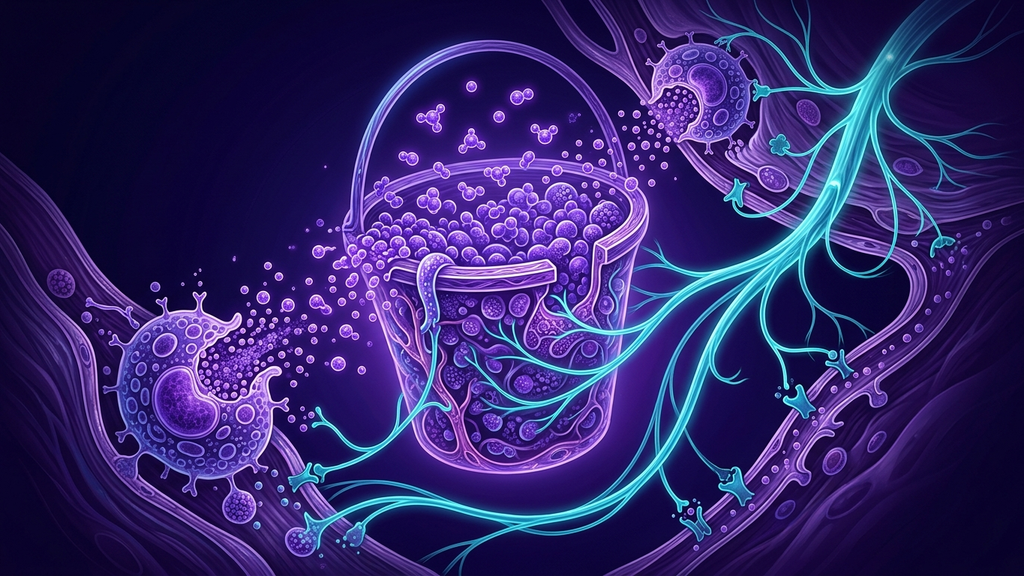
Histamine keeps surfacing in intake — flushing, hives, headaches, food reactions, unexplained anxiety, and the sense of reacting to everything. Yet it is one of the thinnest areas of patient-facing content. The useful clinical model is the "histamine bucket": symptoms appear not when histamine is present, but when total histamine load exceeds the body's capacity to degrade it. Both sides of that equation are influenced by the autonomic nervous system.
Intolerance Versus Allergy Versus MCAS
These get conflated, and the distinction guides treatment. A classic allergy is an IgE-mediated response to a specific trigger. Mast cell activation syndrome (MCAS) is inappropriate, excessive mediator release from mast cells across multiple systems. Histamine intolerance is narrower: a relative deficiency in the enzymes that break histamine down — primarily diamine oxidase (DAO) in the gut and histamine-N-methyltransferase (HNMT) intracellularly — so that dietary and endogenous histamine accumulates. A client can have one, two, or all three, and they amplify each other.
Why the Bucket Overflows
Load rises from histamine-rich or histamine-liberating foods, gut dysbiosis producing histamine, and mast cell mediator release. Clearance falls when DAO is deficient — which is common with gut inflammation, since DAO is produced by the intestinal lining. So the classic vicious cycle is: gut inflammation lowers DAO, lower DAO raises histamine, histamine drives more inflammation and permeability, which further lowers DAO.
The Autonomic Connection
This is where practitioners can add value beyond the standard low-histamine-diet advice. Mast cells are directly modulated by the autonomic nervous system. Sympathetic activation and stress promote mast cell degranulation; vagal, cholinergic tone tends to stabilize them via the same cholinergic anti-inflammatory pathway that governs broader immune signaling. A client stuck in sympathetic overdrive is, in effect, squeezing the histamine trigger continuously. This explains the otherwise puzzling observation that histamine symptoms flare with stress and poor sleep independent of diet.
It also explains the overlap with anxiety. Histamine is itself a neurotransmitter involved in arousal and wakefulness; excess central histamine contributes to the wired, anxious, insomniac presentation. The client experiencing "histamine anxiety" is not imagining a connection.
A Layered Strategy
- Lower the load — a time-limited low-histamine diet to test responsiveness, not as a permanent restriction.
- Restore clearance — heal the gut lining to recover DAO, address dysbiosis, and consider DAO support with meals where appropriate.
- Stabilize the mast cells — the standard mediators plus, importantly, autonomic down-regulation: vagal tone work, sleep, and stress load reduction directly reduce degranulation.
- Consider vagal neuromodulation — non-invasive vagus nerve stimulation and focused ultrasound are being explored specifically for their mast-cell-stabilizing, anti-inflammatory effect.
Clinical takeaway: Histamine intolerance is a load-versus-clearance problem, and autonomic state sits on both sides — sympathetic drive triggers mast cells while gut inflammation starves DAO. Diet lowers the load; restoring gut function and vagal tone raises the ceiling. Treat both or the bucket keeps overflowing.
References
- Maintz L, Novak N. "Histamine and histamine intolerance." American Journal of Clinical Nutrition, 2007;85(5):1185-1196.
- Afrin LB et al. "Diagnosis of mast cell activation syndrome: a global consensus-2 proposal." Diagnosis, 2021;8(2):137-152.
- Theoharides TC et al. "Mast cells and inflammation." Biochimica et Biophysica Acta, 2012;1822(1):21-33.
- Forsythe P. "Mast cells in neuroimmune interactions." Trends in Neurosciences, 2019;42(1):43-55.